
CFMOTO to Replace Yamaha in WorldWCR: A partnership of Mutual Ambition
After months of speculation surrounding Yamaha's future involvement in the FIM Women's Circuit Racing World Championship (WorldWCR), the MotoGP Sports Entertainment Group has confirmed that Chinese manufacturer CFMOTO will take over as the championship's exclusive motorcycle supplier from 2027 with a contract lasting until 2029.
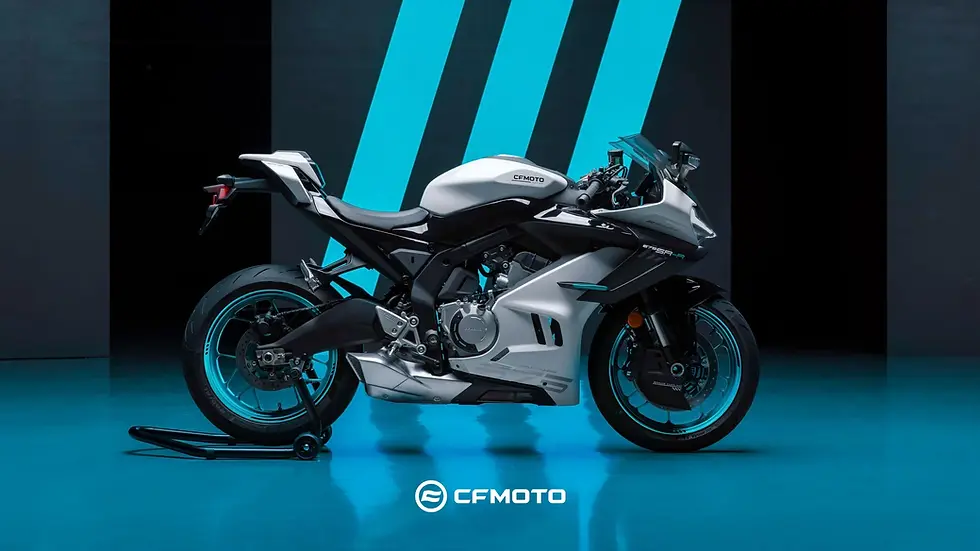
The agreement will see the Yamaha R7, which has served as the sole motorcycle on the WorldWCR grid since the championship's introduction in 2024, replaced by the CFMOTO 675SR-R, a 675cc three-cylinder machine offering approximately 15 horsepower more than its predecessor. WorldWCR will retain its single-make format, ensuring that competitors continue to race on identical machinery, although the introduction of a more powerful motorcycle, alongside Michelin's arrival as the championship's new tyre supplier, promises a considerable technical adjustment for riders.
While the additional horsepower is perhaps the most immediately apparent consequence of the announcement, the partnership warrants consideration beyond the performance figures. For a manufacturer whose ambitions within international motorcycle racing have become increasingly apparent, WorldWCR presents an opportunity to establish a more substantial technical presence within the sport. Equally, for a championship still navigating questions surrounding its long-term development, competitive standards and place within the wider motorcycle racing structure, CFMOTO's investment could prove particularly significant.
Indeed, what makes this agreement interesting is not necessarily that WorldWCR has secured a new manufacturer, but that both parties have arrived at a point in their respective development where the interests of one align remarkably well with the ambitions of the other.
CFMOTO's ambitions extend well beyond WorldWCR
To anyone familiar with the Grand Prix paddock, CFMOTO's growing interest in international motorcycle racing will hardly come as a revelation. Having initially entered Moto3 in 2022, the Chinese manufacturer has since established an increasingly prominent presence through its association with Jorge Martínez's Aspar Team, becoming the title partner of the team's Moto2 and Moto3 operations in 2024. The partnership has enjoyed extraordinary success, with David Alonso's record-breaking Moto3 World Championship campaign that same year providing the manufacturer with considerable international exposure, while the subsequent development of Alonso and Daniel Holgado into MotoGP-bound riders has only reinforced the team's reputation as one of the most accomplished talent-development operations in the paddock.
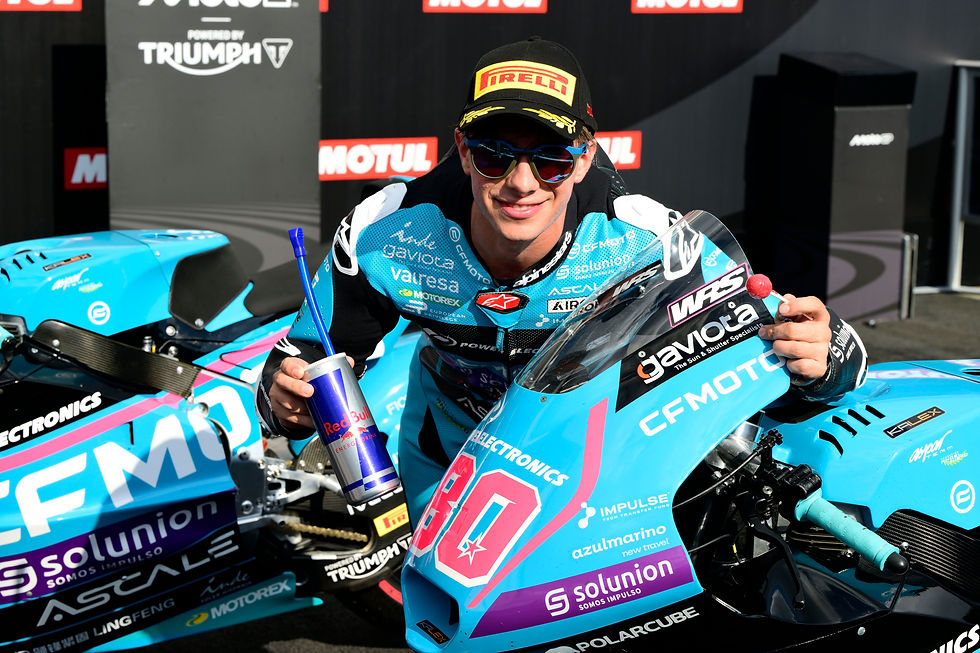
The current Moto3 campaign has offered further evidence of that strength, with Máximo Quiles establishing himself as the dominant figure in the championship and teammate Marco Morelli demonstrating considerable promise in his own right. However, there is a gap between CFMOTO's considerable success as a commercial partner within Grand Prix racing and its involvement as a manufacturer of competitive racing machinery.
Despite the CFMOTO branding carried by Aspar's motorcycles, the team's Moto3 and Moto2 operations utilise KTM and Kalex machinery respectively. In other words, while CFMOTO has become closely associated with some of the most successful young riders in Grand Prix racing, those results have not been achieved on motorcycles of its own development.
Rather than attaching its name to an already established racing operation, CFMOTO will now have its own production-derived motorcycle forming the technical foundation of an entire FIM World Championship, a responsibility that extends considerably beyond commercial sponsorship and into the practical realities of supplying, supporting and maintaining competitive machinery across an international season.
Naturally, the distinction between supplying a single-make championship and entering an open-manufacturer competition such as WorldSBK is considerable. With every rider competing on identical CFMOTO machinery, there will be no direct comparison against rival manufacturers, nor will the company face the same pressures associated with developing a motorcycle capable of outperforming its competitors.
Nevertheless, it would be equally dismissive to overlook the significance of the opportunity.
CFMOTO has made little secret of its wider ambitions within motorcycle racing, with a potential future involvement in MotoGP or WorldSBK having attracted considerable discussion. Yet establishing a credible presence as a manufacturer at the highest levels of the sport requires more than financial resources or a successful commercial partnership. It demands technical expertise, racing infrastructure, established relationships and an understanding of the considerable operational responsibilities involved in supporting machinery at an international level.
WorldWCR offers an opportunity to begin demonstrating some of those capabilities within an existing championship, while simultaneously strengthening the manufacturer's relationship with the wider WorldSBK paddock. There is also an obvious commercial consideration. CFMOTO is seeking to expand its international recognition in a market historically dominated by Japanese and European manufacturers, and the opportunity to associate one of its own production motorcycles with an FIM World Championship represents a valuable proposition, particularly when that motorcycle forms the basis of every competitor's campaign.
For WorldWCR, progression must mean more than a faster motorcycle
The agreement is equally revealing when considered from WorldWCR's perspective, particularly given the relatively short period in which the championship has existed and the considerable expectations placed upon it. When WorldWCR was introduced in 2024, the priority was understandably to establish a competitive international championship for female riders, many of whom had previously competed in domestic series or encountered considerable barriers when attempting to progress through the established motorcycle racing ladder.
Yamaha's involvement was instrumental in making that ambition a reality with the R7 offering an accessible, relatively manageable platform on which riders from differing backgrounds could compete, while the single-make format reduced the influence of machinery disparities and allowed the championship to establish a recognisable sporting identity.

It would therefore be unfair to interpret Yamaha's departure as an indictment of either the manufacturer or the machinery upon which WorldWCR was founded. On the contrary, the championship's ability to attract another manufacturer, particularly one with ambitions extending into other areas of international racing, is partly a consequence of the foundations established during its first three seasons.
However, the requirements of a championship in its inaugural year are not necessarily the same as those of a category seeking to consolidate its place within international motorsport. The introduction of the 675SR-R represents a considerable change in the demands placed upon competitors. Beyond the additional horsepower, the characteristics of a three-cylinder engine will require riders to reconsider aspects of their riding technique, while the simultaneous transition from Pirelli to Michelin tyres adds another layer of complexity to an already substantial technical change.
For a championship whose competitors arrive with widely varying levels of experience, adaptability will be particularly important, and the introduction of machinery requiring a broader range of technical skills should provide an interesting indication of how the competitive field has developed since 2024.
Yet it is worth questioning the assumption that more powerful machinery is necessarily synonymous with a more accomplished championship. The quality of motorcycle racing has never been determined exclusively by horsepower, and the ability to extract performance from a relatively accessible machine is hardly an insignificant measure of a rider's technical ability. Indeed, some of the most competitive and demanding racing in the sport takes place on machinery considerably less powerful than that used in its premier categories, it is not uncommon that Moto2 produces a more enticing race than MotoGP.
Equally, the introduction of a faster motorcycle does not automatically resolve the more substantial question surrounding WorldWCR: what opportunities should the championship provide for its competitors once they have demonstrated their abilities within it? WorldWCR has already established that there is a competitive international field of female riders deserving of greater recognition, but the existence of a dedicated championship should not become the conclusion of the pathway it was intended to strengthen.
If the category is to fulfil its wider potential, its development must eventually be measured not simply through improvements in machinery, visibility or commercial support, but through the opportunities available to its riders within the broader racing structure, whether that is WorldSSP, WorldSBK or other international competitions. There is little value in creating an increasingly sophisticated championship if its most successful competitors continue to encounter the same barriers to progression that made its introduction necessary in the first place.
That is not a criticism of the CFMOTO agreement itself. Rather, it is an acknowledgement that WorldWCR's sporting development must be considered alongside the larger question of how women are incorporated into international motorcycle racing. What the partnership does demonstrate, however, is that WorldWCR is increasingly capable of attracting commercial investment from manufacturers with interests that extend beyond the promotion of women's participation in motorsport. This should be regarded as a positive development.

There has understandably been considerable emphasis on the importance of manufacturers, teams and championship organisers supporting women's racing as a matter of opportunity and representation. However, the long-term sustainability of any international sporting competition depends, at least in part, on its ability to offer genuine commercial and competitive value to those investing in it. The agreement therefore represents something of a convergence between two parties seeking to establish themselves more firmly within international motorcycle racing, albeit from considerably different starting points.
For CFMOTO, the championship offers an opportunity to move beyond its established identity as a Grand Prix commercial partner and demonstrate its capabilities as a supplier of racing motorcycles. For WorldWCR, the arrival of an ambitious manufacturer provides both a technical progression and further evidence of its developing commercial appeal.
Neither outcome should be taken for granted, and the ultimate success of the partnership will depend upon considerably more than the initial enthusiasm surrounding its announcement. Nevertheless, there is something particularly significant about a manufacturer with aspirations of competing at the highest levels of motorcycle racing identifying a women's championship as a worthwhile part of its development.
Perhaps that, more than the additional 15 horsepower, is the most interesting aspect of the agreement. I struggle not to question whether a new manufacturer taking over from an old, as opposed to an expansion of a multi-make championship is enough to justify sustainable development for the WorldWCR championship, but that is a conversation for another time.


Comments